3. ENP
Industrial Electroless Nickel Plating
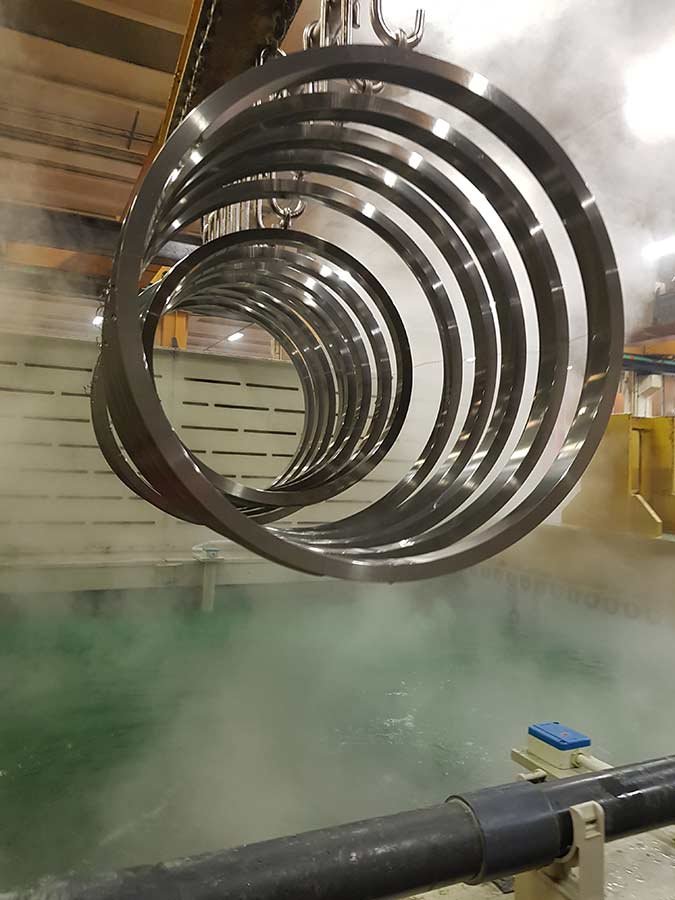
The surface treatment of nickel plating is widely used to protect steel from oxidation and to give high resistance to corrosion and wear.
In the chemical nickel plating process (ENP) a phosphorus content 10 (properly called high phosphorus) is used.Deposition occurs by chemical reaction in order to obtain a uniform coating regardless of the geometry of the components to be treated. The components subjected to surface treatment of nickel plating are supplied with thicknesses of 25-30 microns, 50 microns, 75-80 microns, on request.With the high phosphorus chemical nickel plating, an average hardness of 500-600 Vickers is reached. The hardness increases when, after the nickel deposit, heat treatments are carried out at temperatures between 280 ° C and 400 ° C with permanence in the oven for pre-established times up to 800 - 1000 HV.Furthermore, after nickel plating it is advisable to carry out the dehydrogenation heat treatment in order to improve the adhesion of the nickel deposit. The certification includes basic controls (thickness test, hardness) and additional controls (metallographic section, alloy composition, salt spray, ferroxyl, bend test, etc.), if required. The ENP process is performed according to different standards such as ASTM B733, ASTM B571, ASTM B117, ASTM B689, ASTM B602, ISO 4527 etc.